In this Long Read
Below is a compilation of blog posts I wrote when we were in the Exumas, Bahamas. At the beginning of these stories, our family had been sailing for less than six months. After leaving Florida, the Bahamas was the first destination we sailed to, and it did not disappoint.
Allen Cay, Bahamas — Our First Isolated Anchorage
Originally posted February 8, 2016
Sometimes I struggle with what direction to take with my blog. My blog is called “Becoming a Sailor”. But, what does that mean? Do I write about the slow uptake of me learning to sail? That I fear sharks as I clean the hull with a scrub brush? Or, do I write of the places we visit – by sailboat?
For the purists, I shall stay strictly on topic. See if this sounds natural:
Lorraine (that’s me) shouted the course, cursed, and spat as salt enveloped and stung her face. The sea spray hammered SV Aphrodite. A lone figure, silhouetted against the inky abyss, put in another reef, as the mast tilted to and fro. They worked quickly, dodging the boom as they went. And then, just as soon as the storm came, it went. The sky cleared, the darkness was behind them, and they felt a stiff breeze. The storm was over.
With that fictitious seafaring drama behind me, I shall move on to real life.
As a matter of fact, I have just learned to reef a sail — in benign conditions. That means I can tie down the sail to make the sail shorter if need be, and I can secure other lines to make the sail maintain its shape. At the helm, I am learning to steer into the wind to stay a course while my husband raises the sail. Practice makes perfect, I guess.
To catch up, we have now sailed from West Bay, New Providence Island, to the Northern Exumas. And, we have had a visitor on board for the last few days.
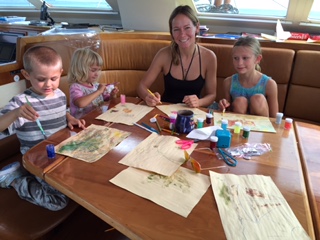
Our visitor’s name is Ewa, which is pronounced “Evva”. She is Canadian, originally from Poland, now lives in Switzerland, and is a friend of my dear friend and blogger YukonJen.
It has been great having Ewa aboard. The kids love her, and it was nice to have someone else to help out with reading the seabed and keeping a lookout for coral heads.
Ewa’s aim is to hitchhike — by boat — to Martinique, if possible. She will leave us soon when she meets up with the next suitable southbound boat.
As I said, we are here in the Exumas (Bahamas) — Allen Cay — to be precise, where huge iguanas roam. They are as big as house cats. They bite occasionally, but four-year-old Karen was enchanted by these seemingly prehistoric creatures.
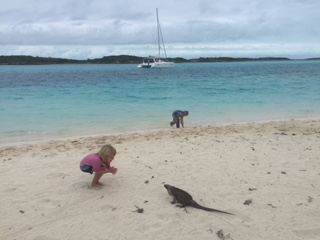
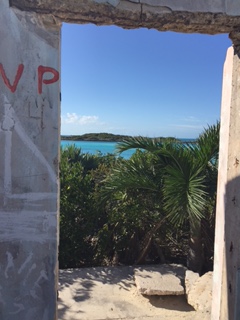
Yesterday the weather was perfect. We visited the beach and explored what looked to be an abandoned house.
First Stingray
Later, jumping from our boat, Karen swam without her life jacket and discovered seeing underwater with goggles for the first time. The underwater visibility was about 80 feet. Karen put her head underwater to see our propeller. Later, she tried diving down to touch the bottom with her dad.
An ominous-looking stingray curtailed our swim. It seemed harmless enough — like a gothic cloak following the contours of the seabed. But, it was almost five feet across and, as it came within several feet of us while we swam, it certainly caused us a swift exit from the water.
First Storm in an Isolated Anchorage
But today, we are indoors and the weather is much different. The waves are tall enough to crash over the narrow islands that surround us. Fortunately, we are in a protected area.
Nevertheless, we watched in the dark as neighboring sailboats repositioned their anchors by flashlight in the wee morning hours. This was no small feat as they battled the darkness, waves, current, and depth, not to mention other sailboats, for a decent spot to anchor. It was quite something watching a silent orchestra of people — all working towards a similar goal — but in different boats.
By 8 a.m. the winds had reached 40 knots.
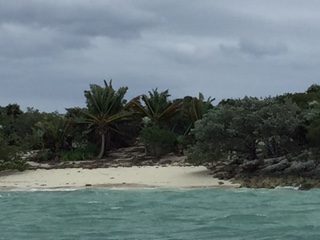
The winds continue to blow us about. But, we are monitoring our anchor placement with GPS. Rick and seven-year-old Paul swam to our anchor yesterday to ensure that it was properly placed. We are hugely grateful for our 105-pound Mantus anchor.
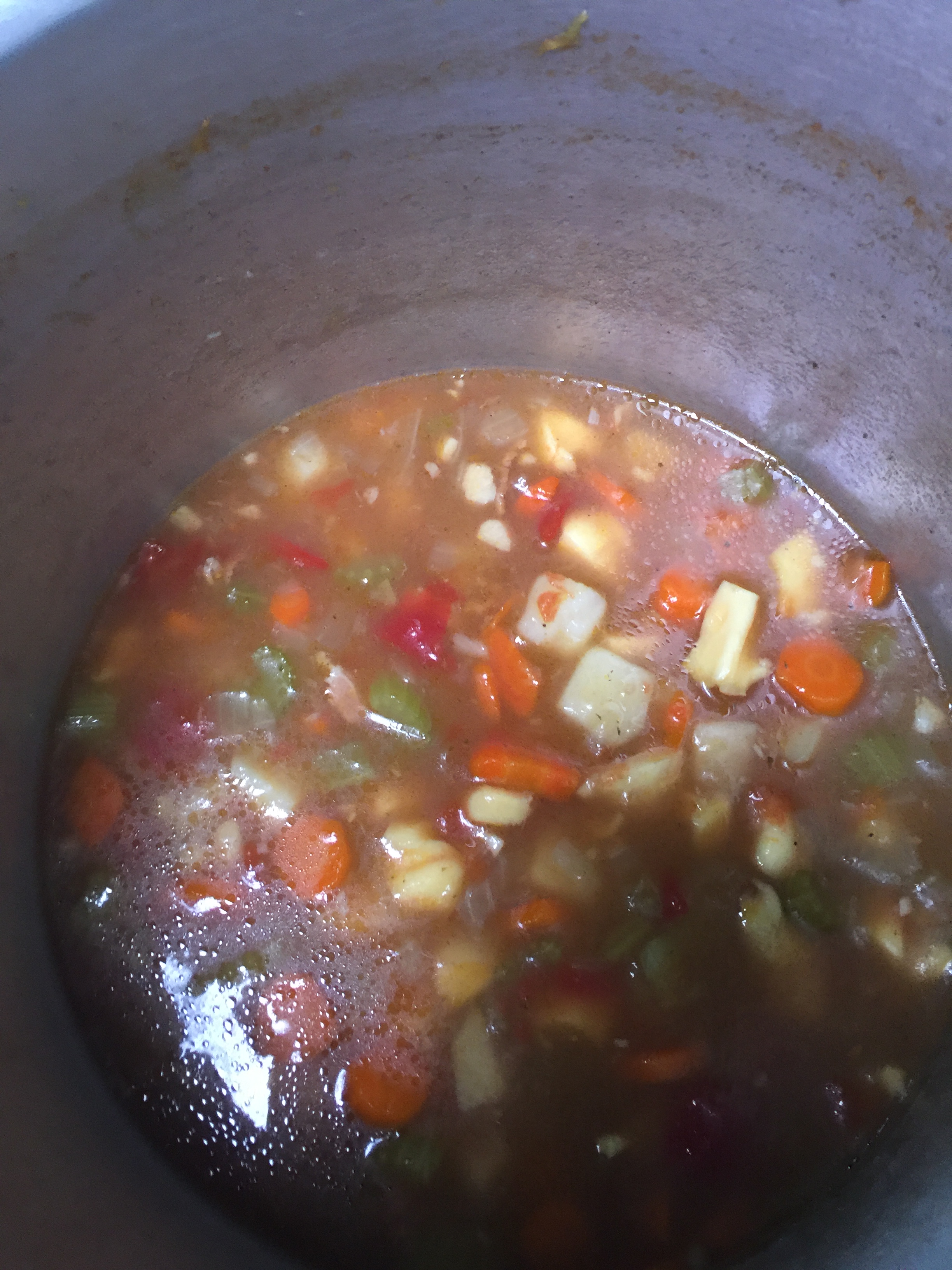
First Time Making Conch Chowder
As we waited out the storm this morning, Rick radioed a Bahamian fishing boat called “Bout Time”. They arrived in the Allen Cay anchorage this morning. A few hours later, they brought us 18 conch (pronounced “conk”) and some grouper fillets.
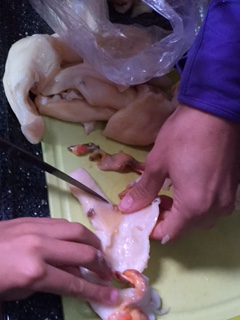
Ewa and Betty prepared the conch for a chowder we made this afternoon.
We will continue to watch our surroundings and location, and listen for our GPS alarms. Soon the weather will be nice enough that I can return to my job of cleaning the hull of our boat. While I don’t fear sharks here, I really could do without that stingray.
The Tidal Creeks of Shroud Cay, Bahamas
Originally posted March 15, 2016
Anchored at Shroud Cay, carefully situated amongst a few other boats, we kept an eye on the coral heads that surrounded us.
To me, it seemed like an iffy spot to throw out our hook. But we were met by our friends from Tavernier, Dave and Nathalie. They suggested a couple of good places for us to anchor.
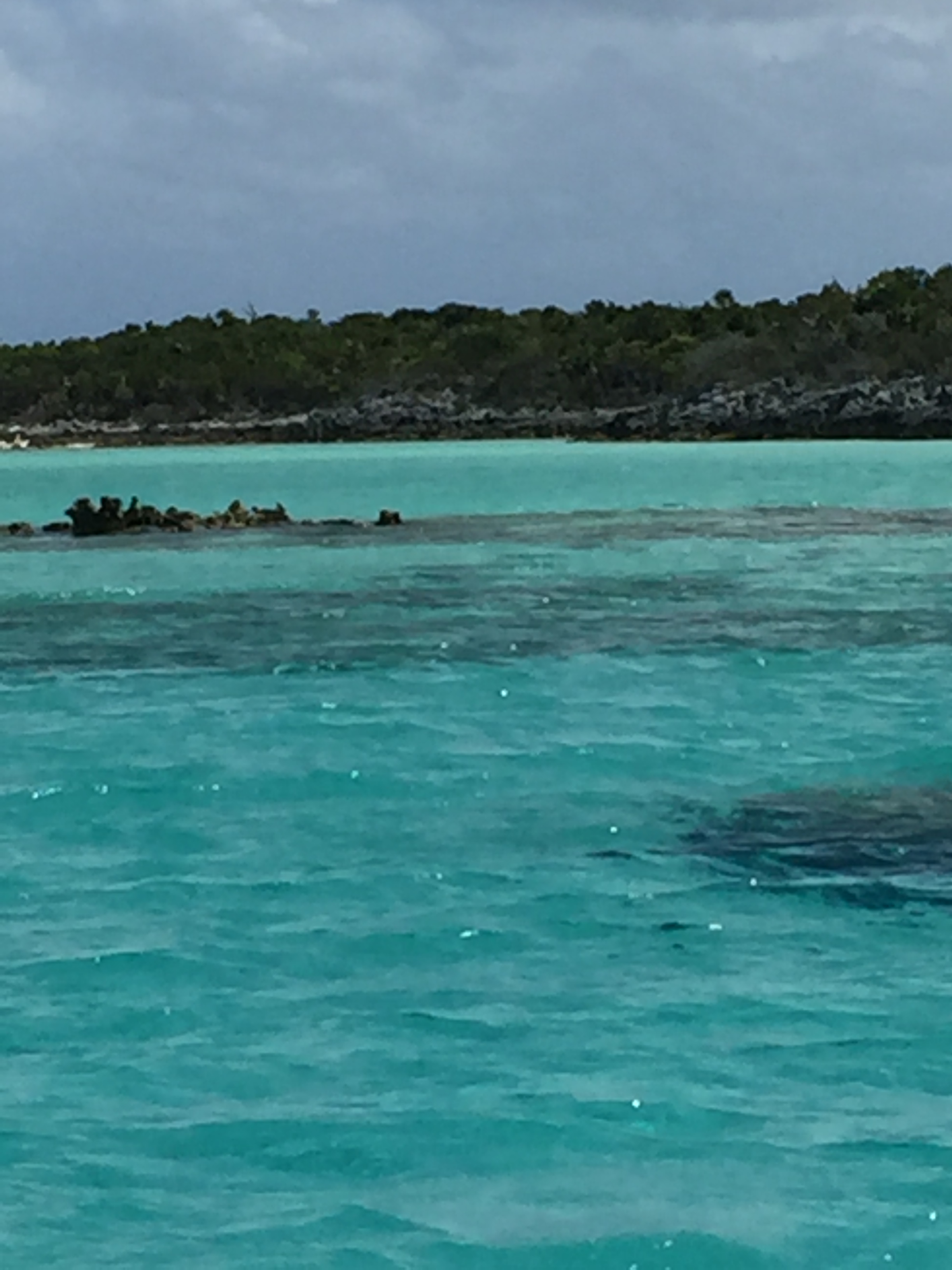
On the first day, the water seemed too rough to venture out with our kids by dinghy, which made it a perfect day to read through some of the new homeschooling materials that we ordered, and Dave and Nathalie had kindly brought with them. By the second day, conditions had changed and we were able to explore the island.
Shroud Cay is known for a network of creeks, some of which are passable only by boat and paddle. The creeks are home to sea turtles, fish, rays, and nurse sharks.
We took the northernmost creek, which is accessible by dinghy and motor.
The creek cut a meandering route across Shroud Cay. Mangroves and coral lined our route. The mangrove roots were salt-encrusted, as though someone had swept by them with a white paintbrush.
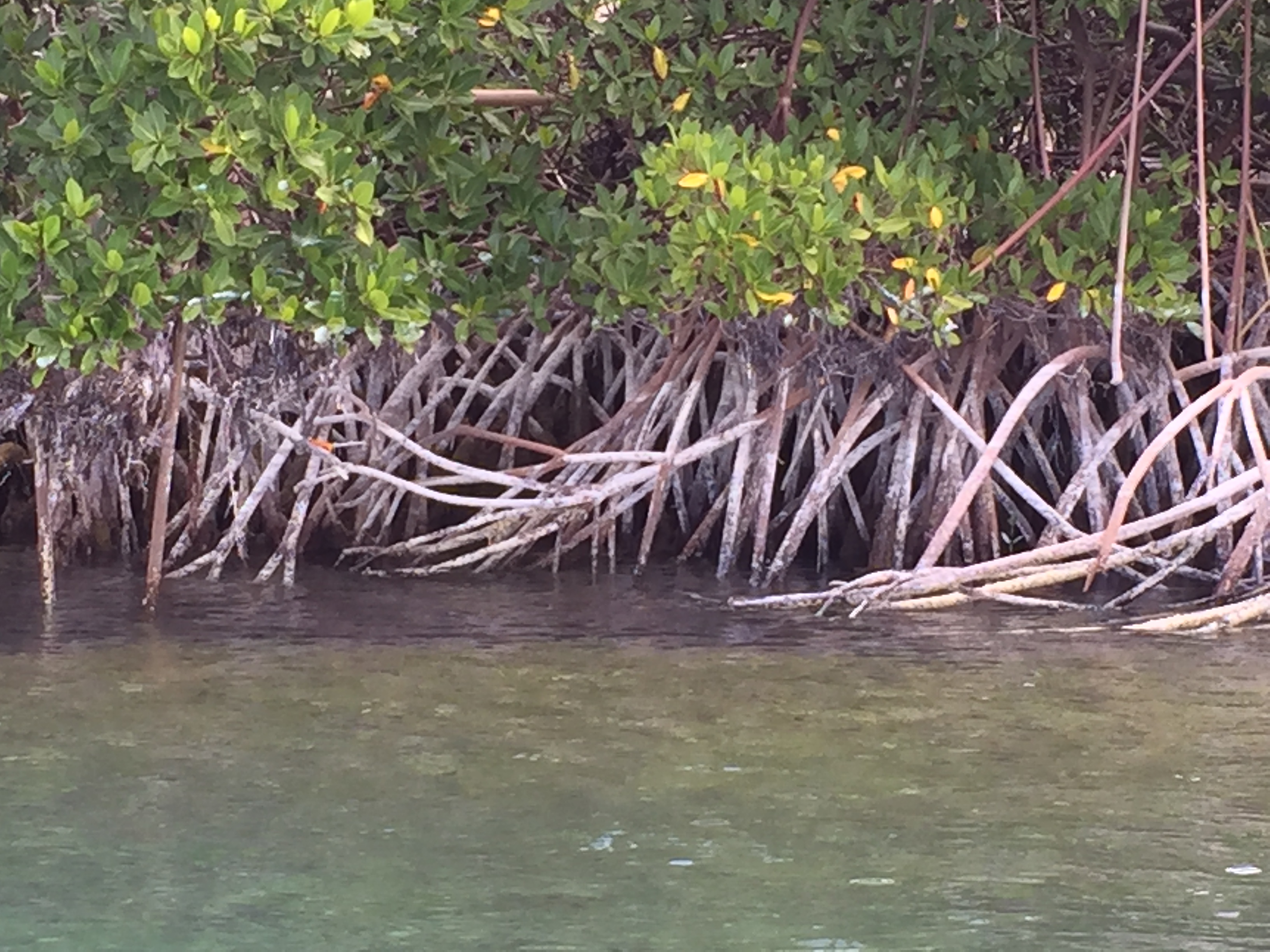
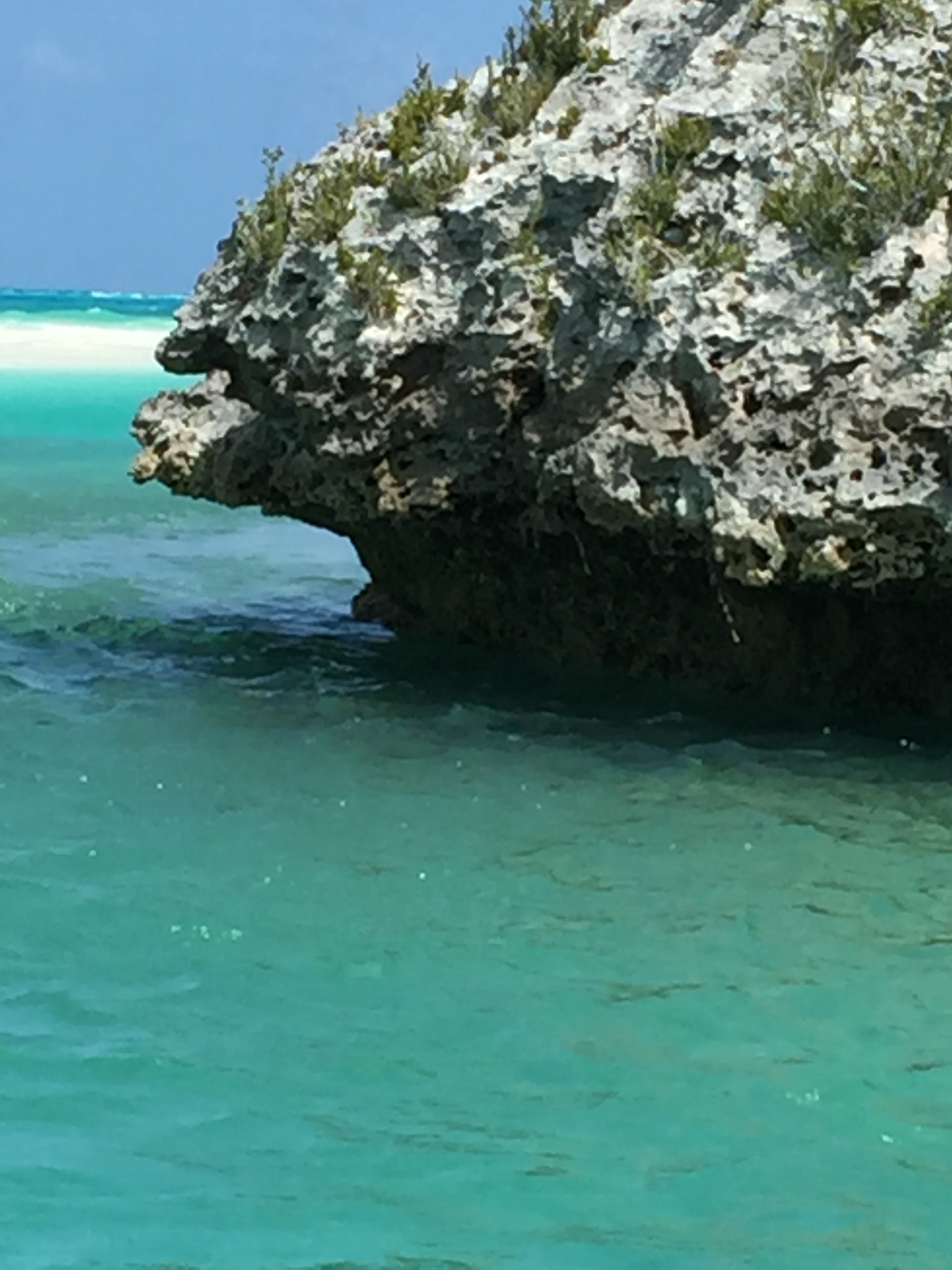
Sand flats shimmered, covered with clear, turquoise waters. The air was warm. The current was swift and, at times, the water rippled inexplicably.
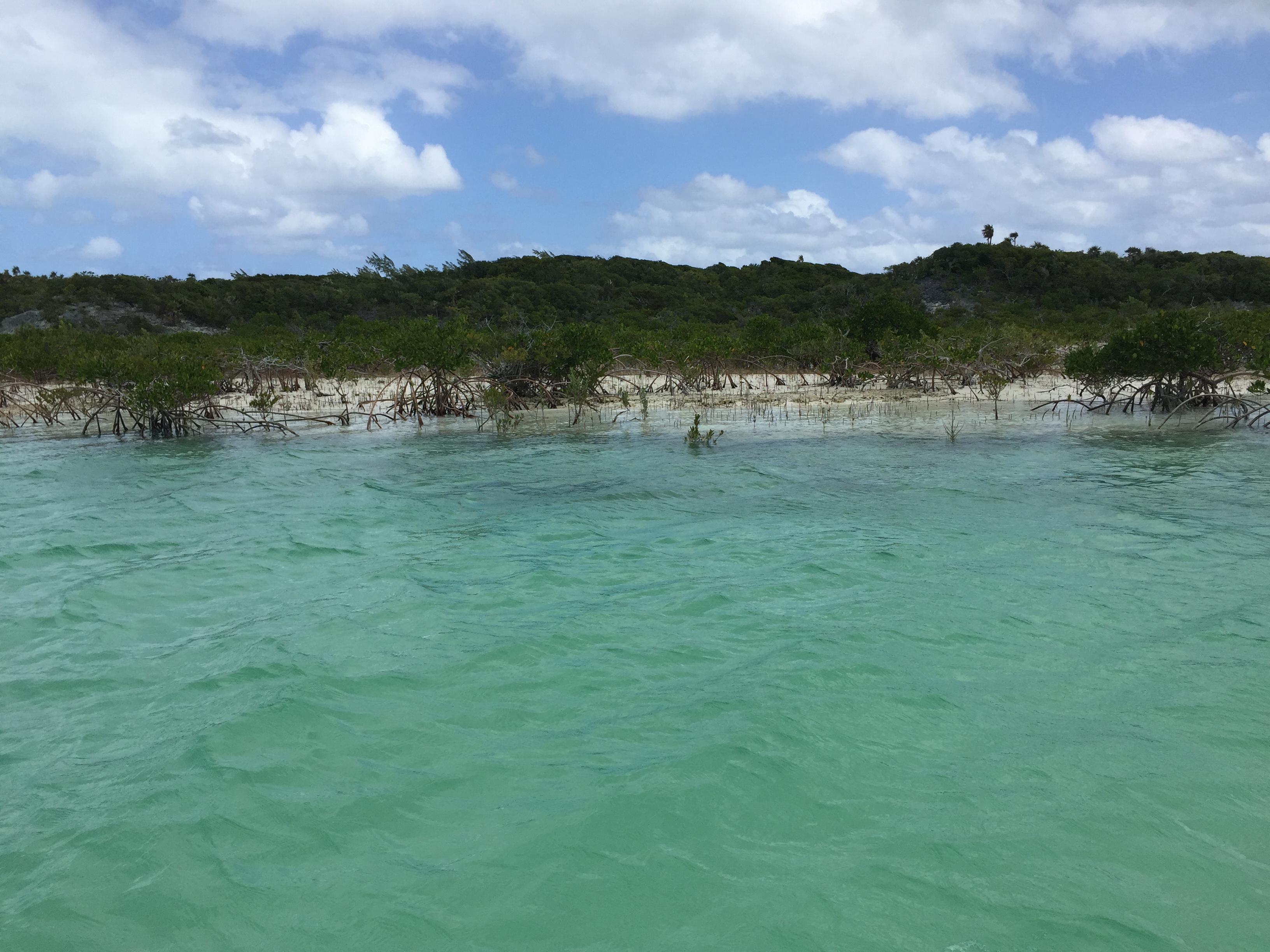
Soon, our peaceful anchorage on the west side seemed a world away. We found ourselves on the east side of Shroud Cay, wading where waves broke and churned.
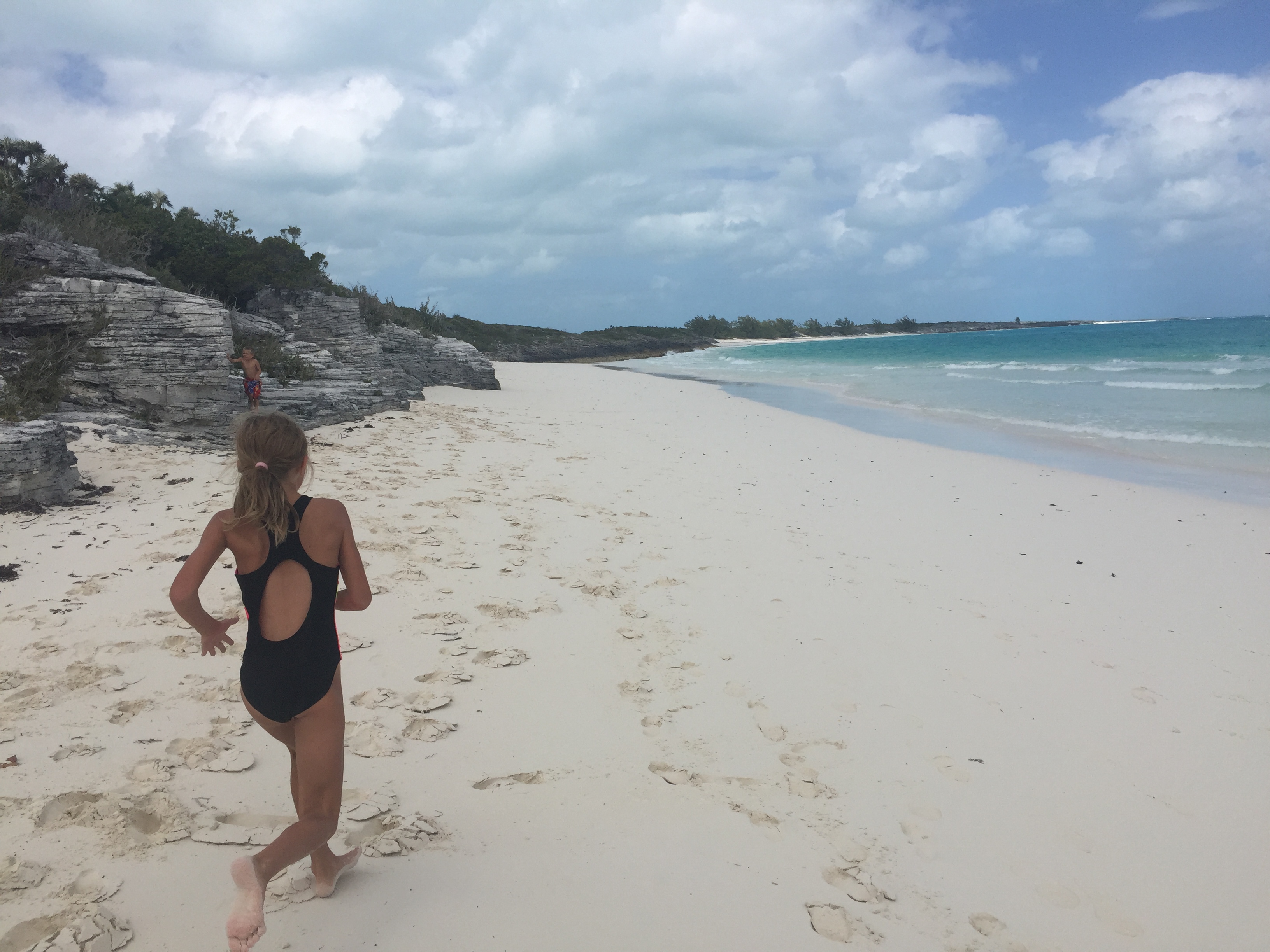
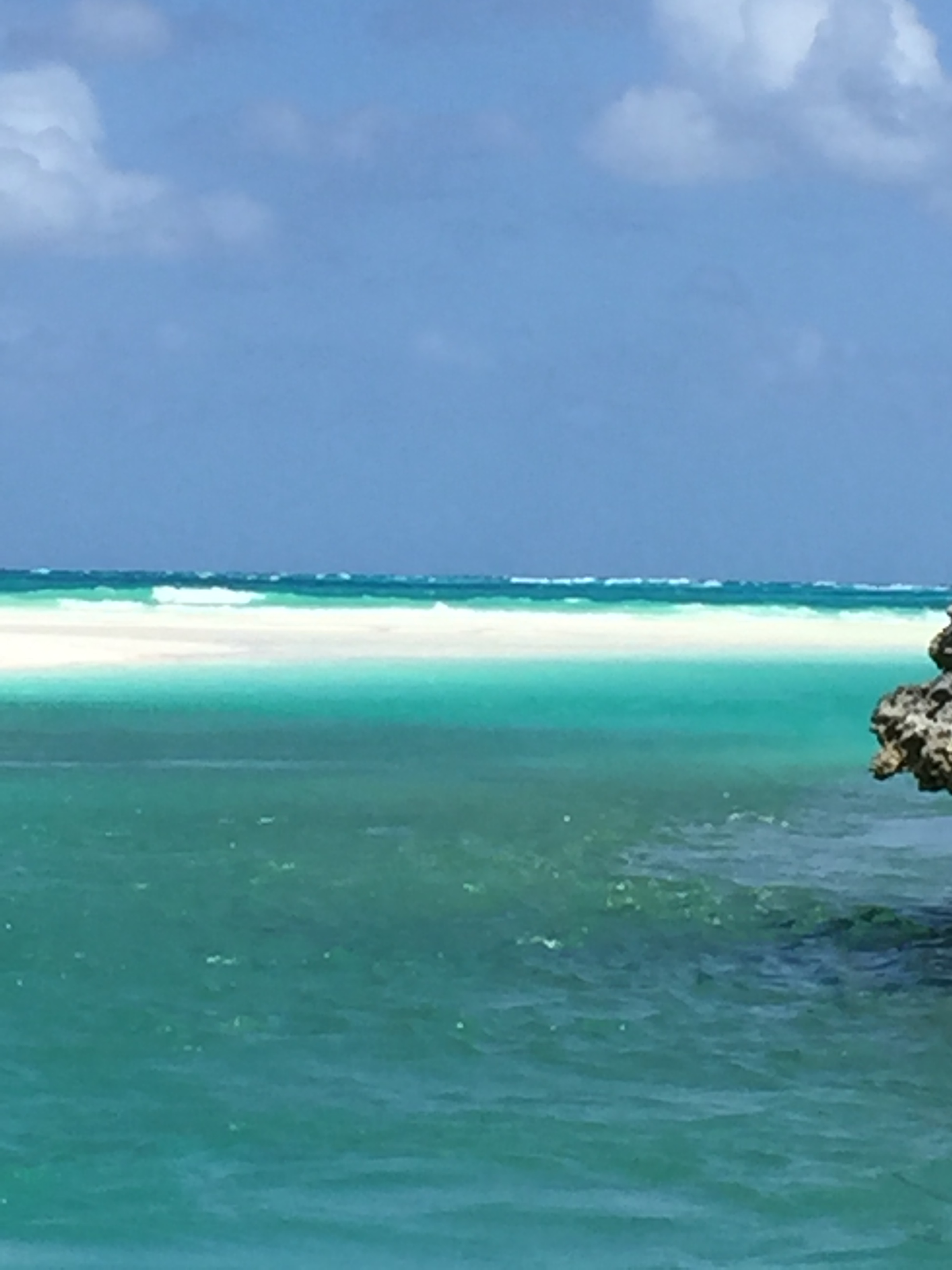
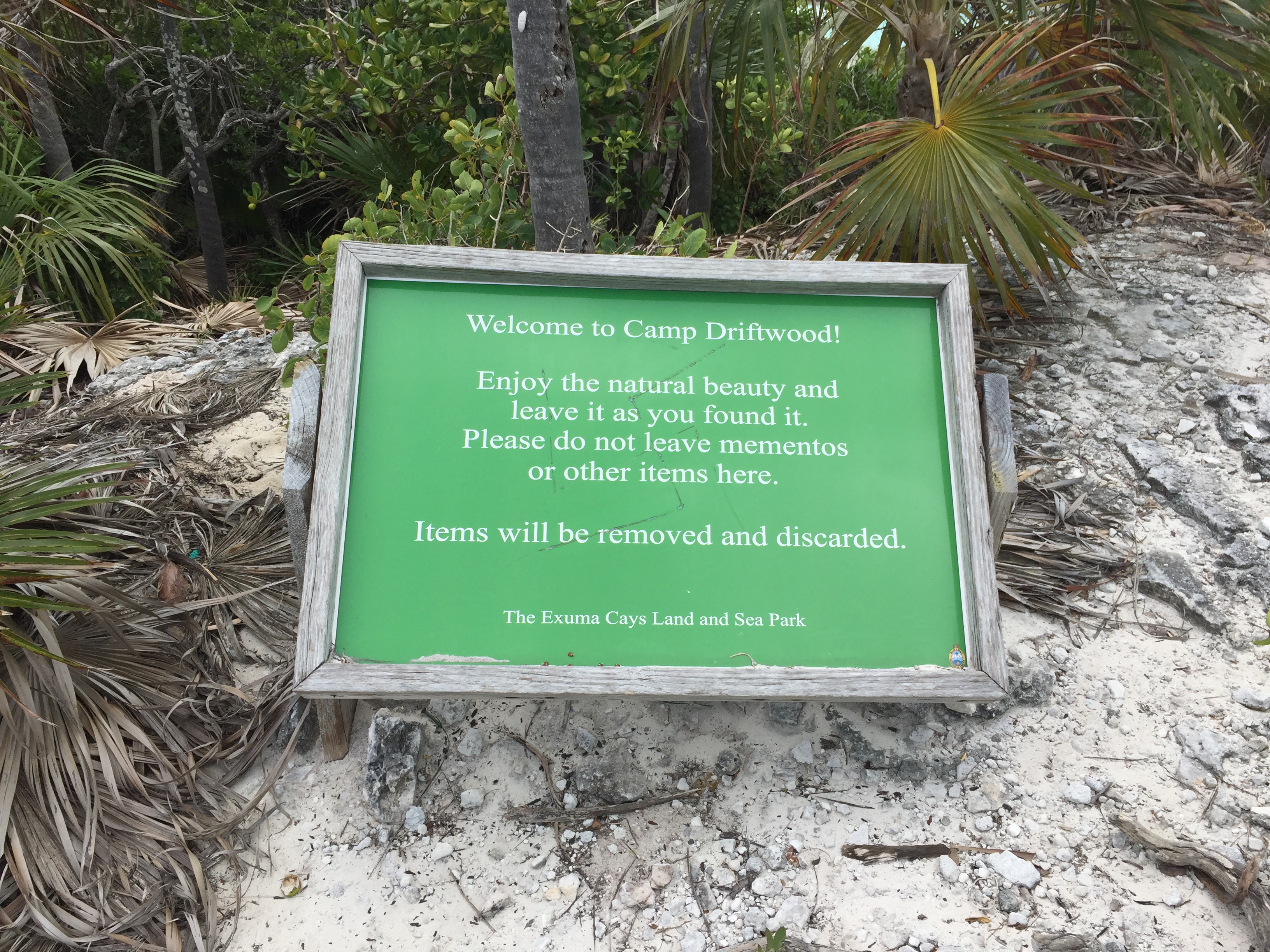
A white beach stretched out before us, and we climbed a limestone path to a place called ‘Camp Driftwood’. The path was strewn with palm leaves and seashells, even as we climbed. Camp Driftwood bears no resemblance to its previous life as a gathering spot for natural mementos and handwritten notes. But it was a lookout point and we were happy to have found it.
As we made our way back, we saw a couple of sea turtles. We turned off our motor and heard birdsong.
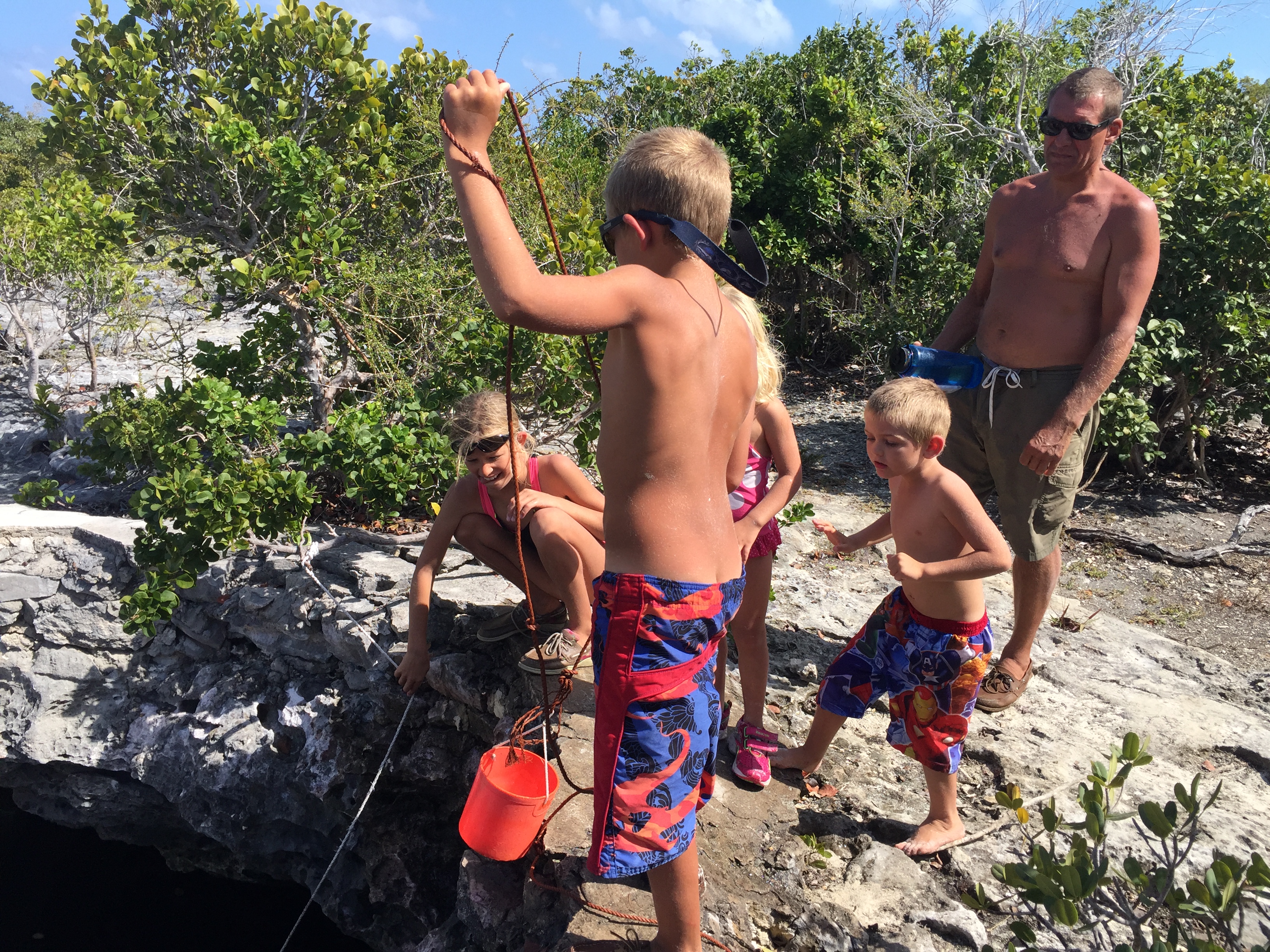
Later, we took a southern creek and hiked up to a well. The well had some small fish in it, which to me seemed unappetizing. Betty and Rick tried the water and said it was good.
On a map, Shroud Cay might look like just another island in the Exumas chain. But the guidebooks don’t lie — it’s a very special place.
Pigs, Sharks, and Thunderball Grotto — Exploring the Exumas with Kids
Originally posted March 17, 2016
We are now at Staniel Cay, and are grateful to have Internet access. This blog post captures some of the sights we’ve seen since leaving Shroud Cay. As four-year-old Henry would say, “It’s been amazing! I love it!”
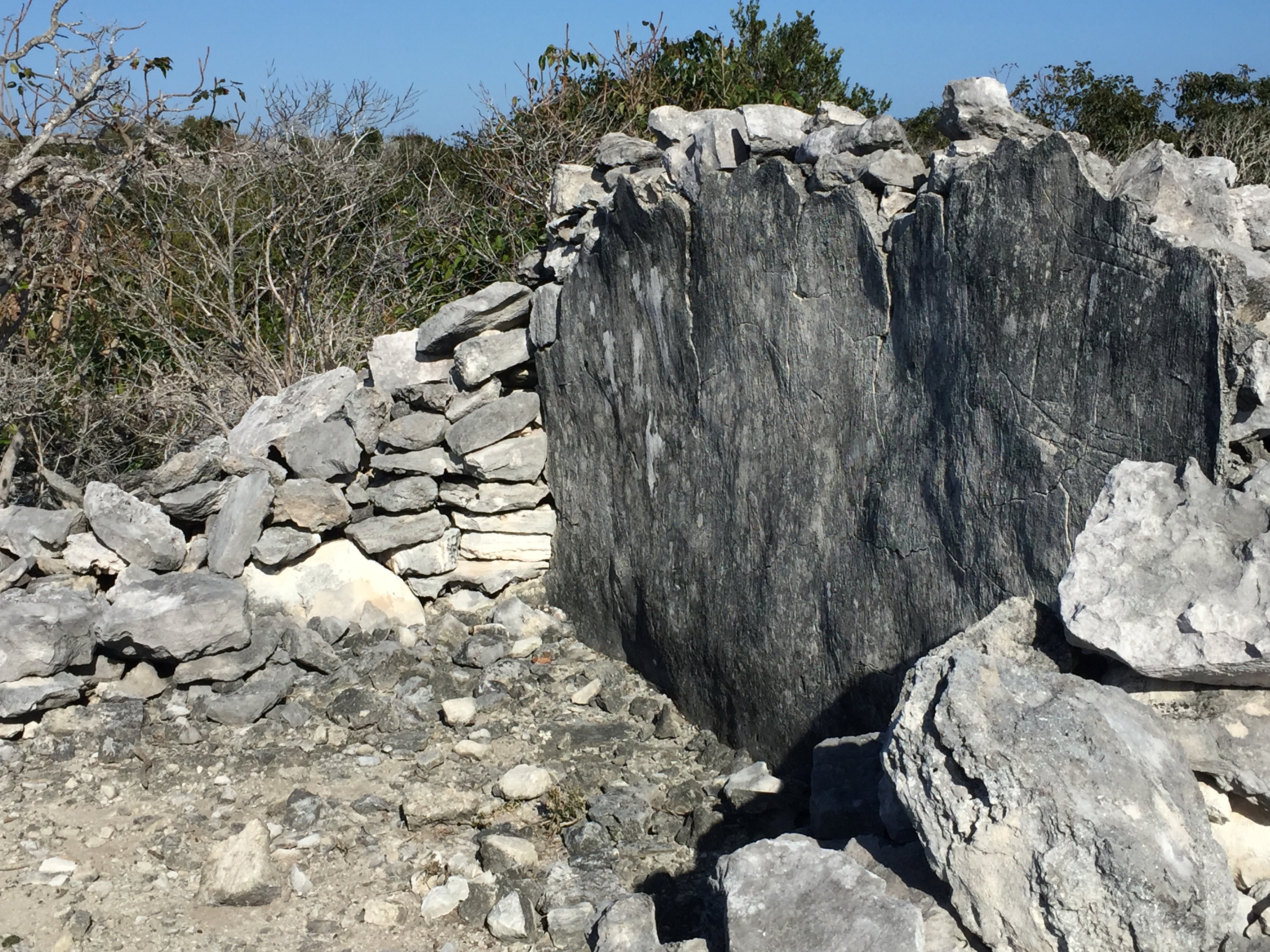
In the past few days, we’ve seen swimming pigs and swam inside Thunderball Grotto. At O’Brien’s Cay, we visited a snorkelling site called The Aquarium. At Warderick Wells, we hiked to see the remains of some Loyalist houses from the 1750s.
As much as possible we try to tie in some homeschooling to our sightseeing. We feel a huge responsibility to make sure our kids have a solid education.
At The Aquarium, we taught our kids about careful, scientific observation. Our kids used a snorkel and a bathyscope to view reef fish. We encouraged them to observe specific characteristics of the fish, such as colours or the shape of the dorsal fin. Then we helped them to identify what they saw using a guidebook.
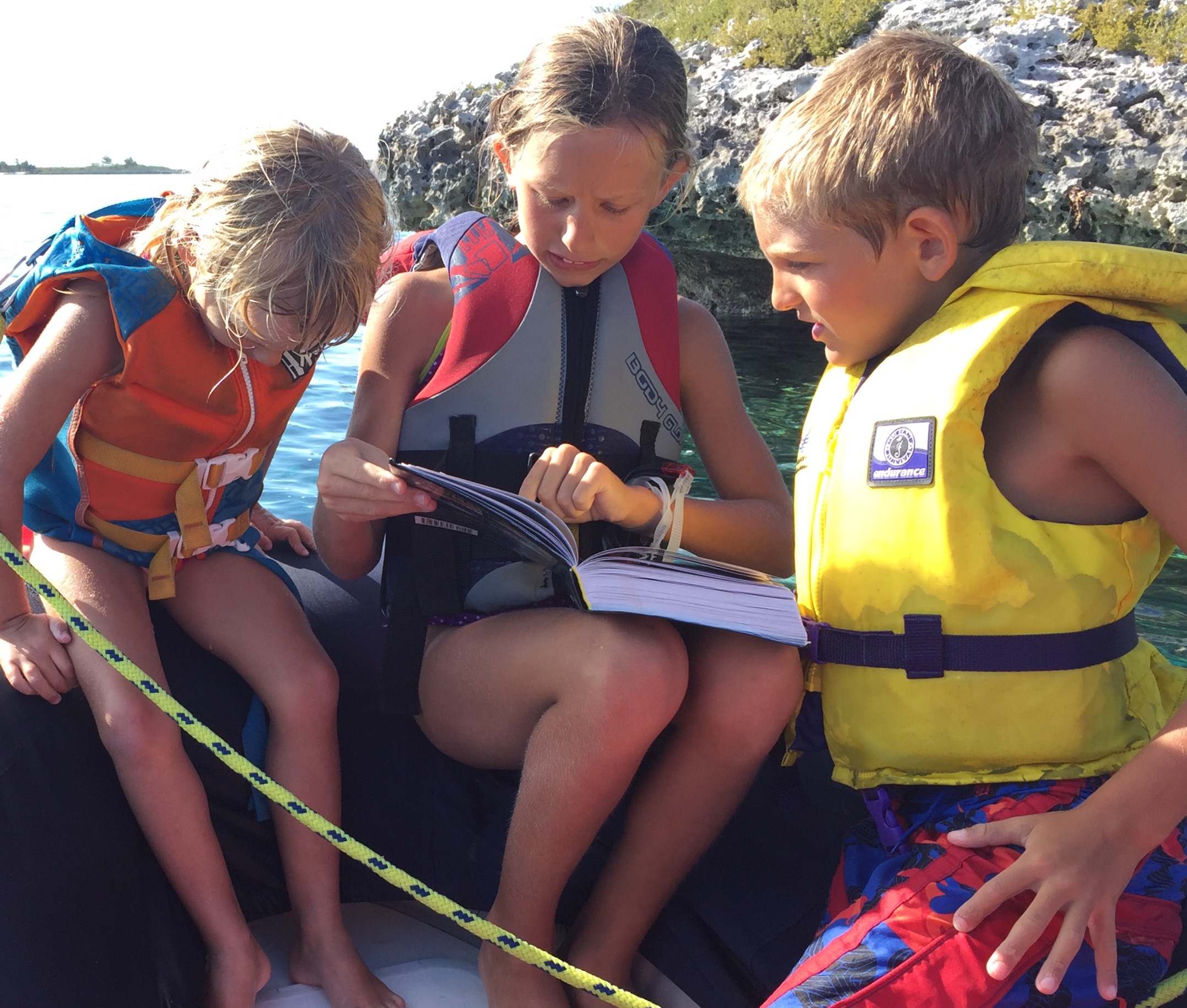
At Pig Beach we learned that pigs bite. As our kids approached a fully grown pig, a woman warned us that another tourist had just been bitten. That put me off the pigs.
Fortunately, there is much to see in the Exuma Cays. It’s a little bit like visiting the Canadian Rockies. But of course, it’s purely Bahamian. The islands are jaw-dropping and the beaches are pristine. Yet, every so often, there are pockets of civilization.
Staniel Cay, for example, has three convenience stores. The Pink Pearl Convenience Store was closed today. Word has it that the owner was in Nassau.
At the Staniel Cay Yacht Club, people on the docks mix and mingle as they watch nurse sharks feed from scraps thrown by fishermen, or — as this video shows — by our son Paul.
Today, there must have been 30 sharks waiting to be fed. Nurse sharks rarely bite but they have a powerful suction when provoked.
Sometimes, our adventures push our kids outside their comfort zone — though they will gladly stand mere feet away from 30 hungry sharks.
Henry and Paul, for example, were reluctant at first to enter Thunderball Grotto. Truth be told, I found the current around the cave to be intimidating.
Henry was afraid of seeing a shark in the cave. Paul was afraid that the tide might close the entrance before he could leave.
We wore our life jackets. With some convincing, both boys cast their fears aside and didn’t want to leave the cave.
People from a superyacht jumped from a hole at the top of the cave into the watery depths below. The kids thought this was fantastic. There were no sharks, but there were lots of reef fish. We left the cave before the tide came in.
I’ll leave this blog post with a picture from our Warderick Wells hike. The hike took us through tropical forests. We hiked past deep cisterns that made my heart skip a beat.
My next post will be from George Town, Bahamas, where we will have reliable Internet access again. We hope to meet some other kid boats.
George Town, Bahamas — Summer Camp for Cruisers
Originally posted March 25, 2016
From the first crackle of the VHF radio in the morning to the sound of dinghies rocketing past our boat late at night — George Town, Bahamas, provides constant reminders that this is no ordinary anchorage. It is a place to connect with other cruisers. And people are keen to meet.
Beyond the anchorage, some cruisers reach out to the George Town community itself. There are organized beach clean-ups and volunteers who read with local schoolchildren. This afternoon, I saw a cruiser making balloon animals for some local kids.
Compared to the rest of the Exuma Islands that we’ve visited, George Town feels like a metropolis. The town offers a full range of amenities — a grocery store, gas stations, boat supplies, laundromat, hair salons, and reputable massage services — just to name a few. A pump-out boat offers boat-side services and can collect your garbage or refill your propane tanks.
Around George Town, there are about 300 boats in several harbours, most of which are occupied by cruisers. In the center of George Town, the dinghy dock is crowded and bustling with activity. Dinghies tie up in multiple layers.
On the Chat n’ Chill beach there are yoga lessons at 9 a.m. and impromptu volleyball games. Yesterday, my husband, Rick, attended a garage sale called “Treasures from the Bilge”. And today, on the beach, there was a seminar about cruising to Cuba. A small group sat under the shade of some trees on wooden benches bleached by the sun. A long, thin flagpole flying the Cuban flag highlighted their table.
The Chat n’ Chill Beach is the kind of place where kids can run about on the beach and swing on a rope or in a hammock. Yesterday, our kids fed a couple of tourist-friendly stingrays.
The atmosphere is a bit like summer camp, without the boxing.
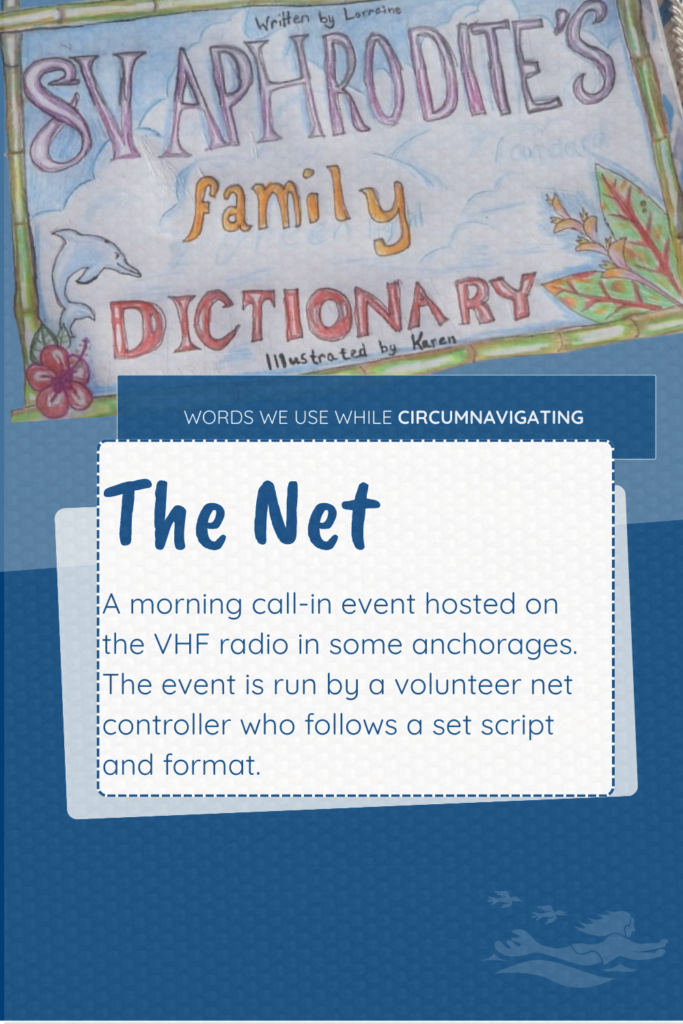
What ties this community together is the VHF radio. Like a rallying call, the cruisers’ net begins at 8 a.m. on VHF channel 72. The cruisers’ net provides weather updates, community announcements, requests for help, and a place to announce new arrivals and departures.
Lasting about 20 minutes, the cruisers’ net provides a window into other people’s worlds. The airwaves are ripe with news about visiting relatives and boat maintenance issues. Today, someone announced that their partner had left suddenly, leaving them single-handed. I understand that this was disappointing. But the tone was bitter. There was an awkward tension on the receiving end as the other cruisers absorbed the news.
Following the cruisers’ net, channel 68 is abuzz with activity. Channel 68 is the cruisers’ hailing channel.
Today, someone requested help taking apart their toilet and a few people responded. Rick sought help with our VHF and AIS systems. As a result, he met two people who were willing to give him a hand. We had one of those people over to our boat for supper with their family.
A few days ago, our 8-year-old son Paul made a “general announcement for kids” on the cruisers’ hailing channel, seeking a playdate. As a result, he made a new friend named Aaron. He is also 8 years old and comes from Vancouver, Canada. His boat is called “Singing Frog”.
This week, my sister Collette is visiting with her 6-year-old daughter, Emily. With Easter weekend ahead of us, we are stocked up on groceries. We will be heading to the Ragged Islands shortly and will be without Internet for the duration of our trip. We are excited to be visiting this remote place — as a convoy — with our friends Dave and Nathalie, who are sailing there in their catamaran, Cheval.
Watch this blog for news about the Ragged Islands. We’ll be back in George Town, Bahamas, in a week.
Note: There is a jump in time here. We visited the Ragged Islands with my sister and my niece, but I decided to put all of the Ragged Islands/Jumentos material in a separate Long Read.
George Town Dock Drama
Originally posted April 9, 2016
I’m not prone to melodrama. However, recent events at a marina in Georgetown, Bahamas, shaved at least a year off my life. Later, to an onlooker, I might have been seen lying on our trampolines looking relaxed and happy. But you’re about to know differently.
Our adventures began as we approached the fuel dock at the Exuma Yacht Club (EYC). Docking involves the fine art of using a lasso combined with the ability to steer and confidence to maneuver without ramming the dock.
At this point, you probably think we rammed the fuel dock. No. We had a hairy incident at the dock later. It was towards the tail-end of our calamities, after the incident that involved the use of a scalpel. But I’ll get to that in a minute.
We stayed for two nights at the Exuma Yacht Club. At first, tied across from the fuel dock, we were industrious. We enjoyed the perks of staying at a yacht club — proximity to shops, convenient garbage drop-off, access to hot showers and Wi-Fi. We used our time on the dock as an opportunity to paint our anchor chain.
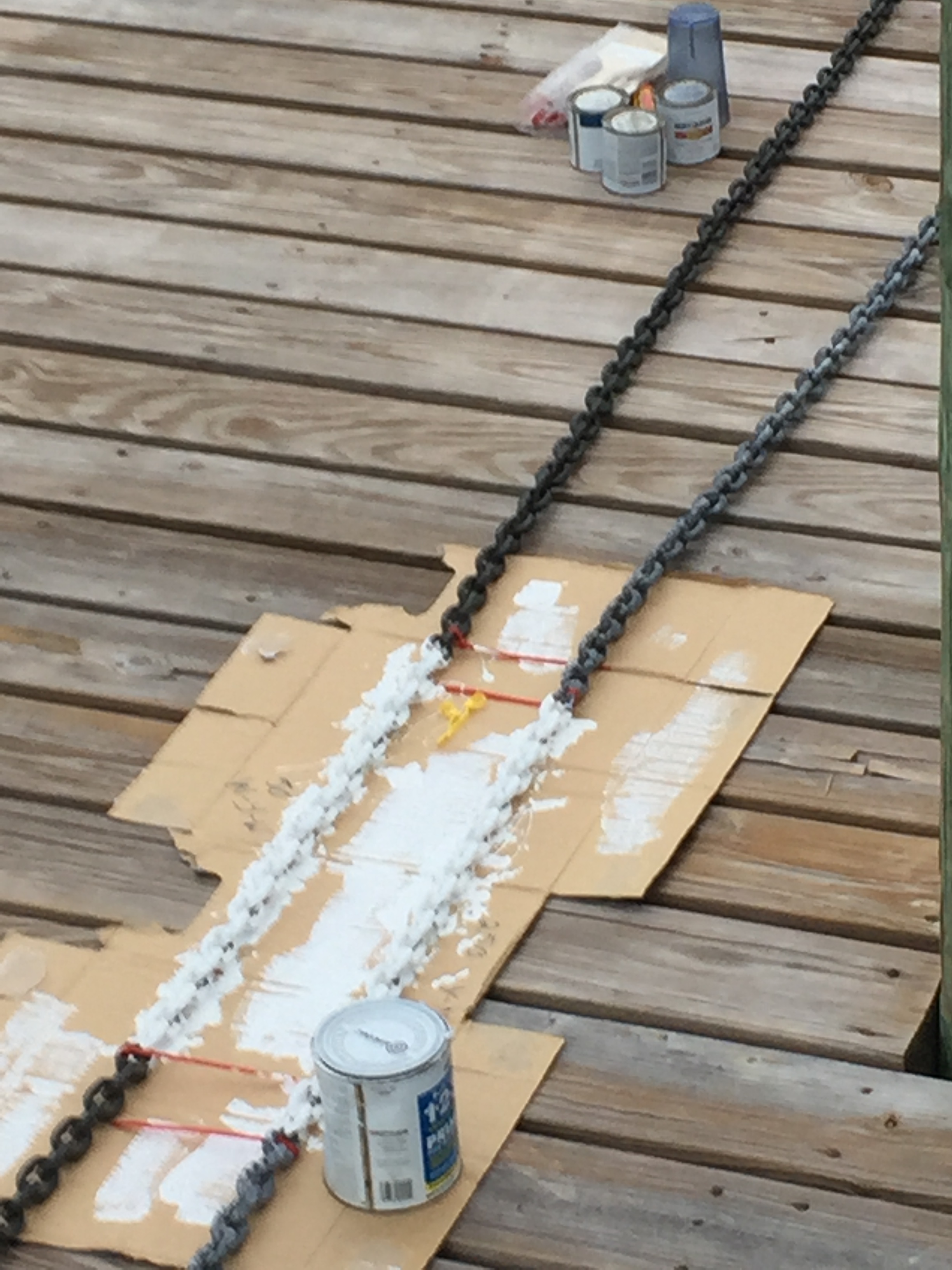
We painted the anchor chain to allow us to colour code chain lengths. The article “How to Mark Readable Depth Marks on an Anchor Chain” explains the system we follow.
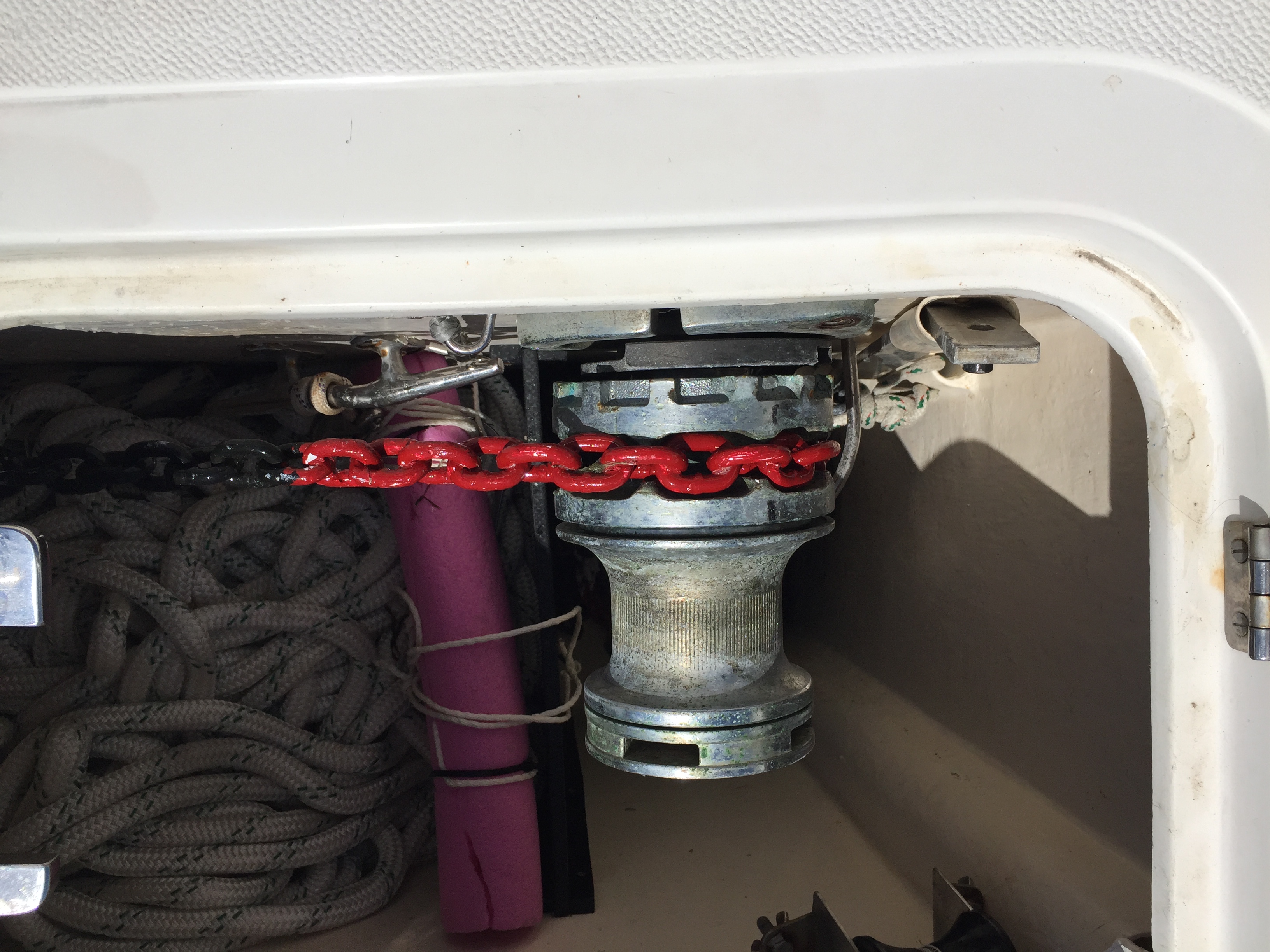
We also scrubbed the decks and cleaned our engine compartments. Being a catamaran, we have two of them.
Henry (age 4) is small enough that he could fit under the stairs at the back of our boat. He cleaned areas that haven’t seen the light of day since our boat was built. All of our kids enjoyed playing on a nearby beach.
Betty’s Coconut Cutting Incident
Things were going pretty well. Then, Betty sliced her thumb open while cutting a coconut. It was quite a mess with blood everywhere. We bandaged her thumb and had to clean the decks some more.
With Betty in a bandage, Paul (age 8) agreed to buy some groceries. To do this, he had to cross a street and walk to the Exuma Market, which is the grocery store here. Paul loved the responsibility and his newfound sense of independence.
High Winds Spell Trouble Leaving the Dock
We wanted to leave the dock earlier but could not. Here is a picture of our neighbour, Lo Spirito di Stella, attempting to leave as the wind blew the boat into the dock.
The crew put a line from the bow of their boat to a piling just outside the left edge of the picture. They used that line on a winch in an attempt to pull the boat off the dock. Unfortunately, the wind was too strong and they had to abort their departure.
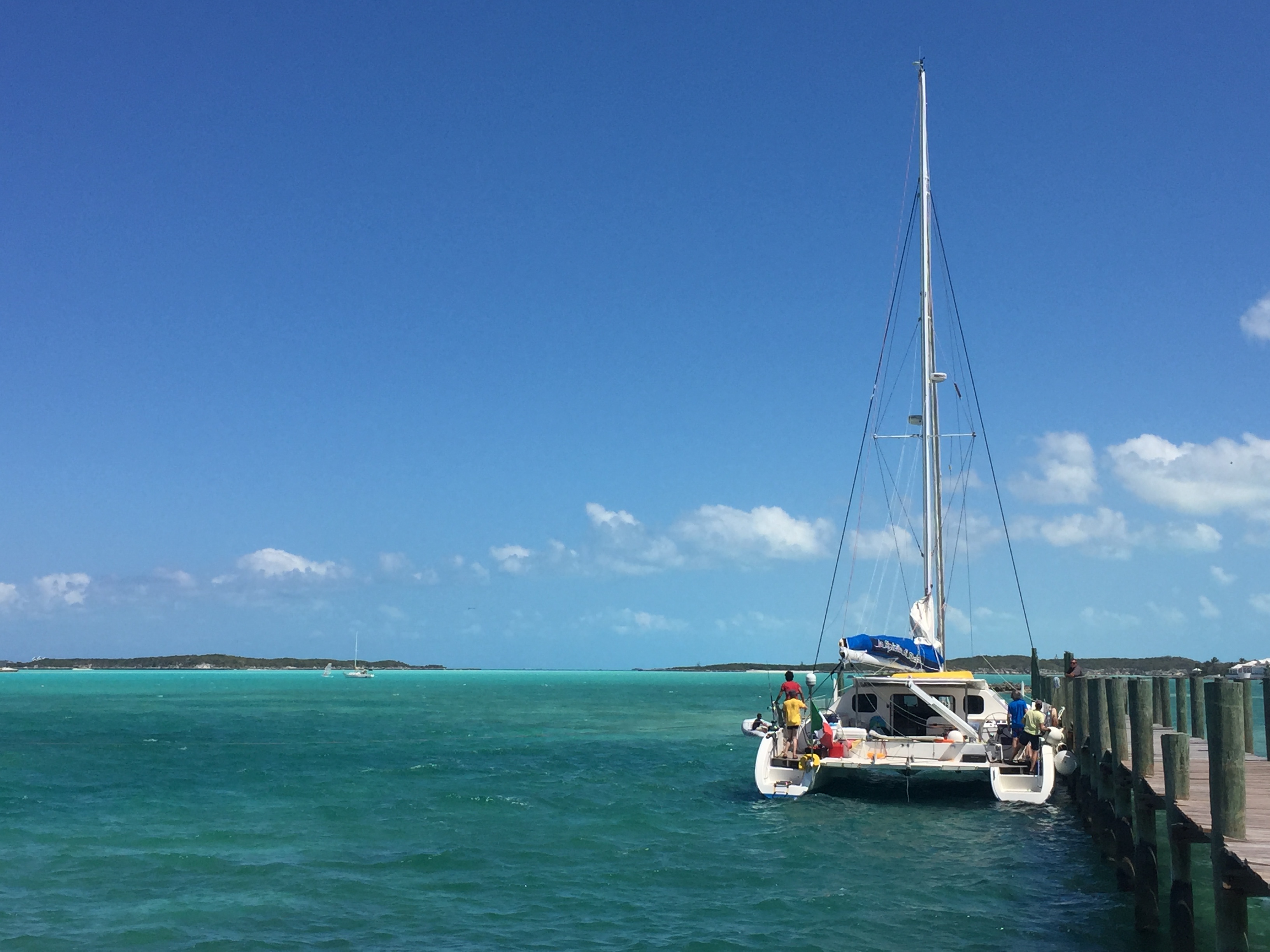
The boat in front of us was bursting with activity. And in case anyone thinks they can’t sail — or, like me, lacks both skills and confidence — you should know that the man at the helm —the skipper — uses a wheelchair and is a very accomplished sailor and disability rights activist. His name is Andrea Stella.
A 2011 article from the BDN Maine news outlet (Bangor, Maine) describes Stella’s catamaran and pursuits as follows:
Working with his architect father, Stella designed the world’s first completely handicapped-accessible catamaran, lo Spirito di Stella. The 56-foot sailboat is the centerpiece of a nonprofit foundation, Spirit of Stella…that gives disabled people the opportunity to enjoy a day at sea for free. Over the last seven years, 5,000 disabled people and their friends have gone aboard and taken a sail.
“From a problem was born an opportunity,” Stella said. “I’m very happy to have given so many disabled people the opportunity to sail.”
Stella’s catamaran is outfitted with two small wheeled seats that allow him to move forward and aft along the deck of each hull. Two elevator lifts allow him to move inside his boat. We said hello in passing. I would have loved to have talked to him more.
Anyway, our neighbour left the dock early this morning. We hoped to follow soon after. As we got ready to depart a boat called “Oz” arrived to fill up on water. I helped them with their lines from shore, though it was more as a friendly gesture as they didn’t really need my help.
As I learned later, the skipper of the boat, Toby, was a former captain of two defender boats. A defender boat is the sort driven by the U.S. Coast Guard.
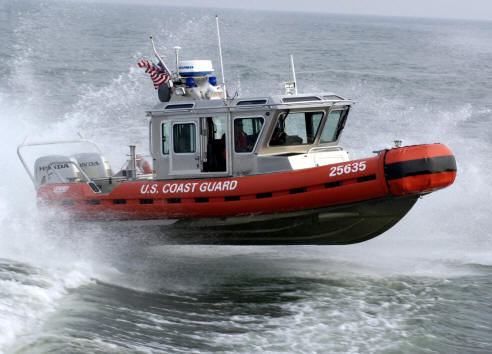
As I chatted with Toby and his family on the dock, little did I realize then that we would need their help much, much, more than they needed my help.
Their guest from the San Francisco area (Mill Valley), Annie, later described their arrival and our attempt to depart as a case where the universe was unfolding as it should.
Then We Had No Steering
As we left the dock to get fuel, Rick realized that we had no steering.
How we came to have no steering is a discussion that lies somewhere in the dark realm of where spouses know best not to tread. All I know is that the hydraulic steering was working when we arrived at the dock. And while we were at the dock, Rick detached the steering to inspect the manual rudder capabilities. It seems the bypass valves were opened in preparation to align the rudders, but with one thing leading to another, the alignment task was deferred and the valves were left open.
The hydraulic steering was quickly fixed, but that matters not a hoot when you realize that you are drifting between a dock on one side and someone else’s shiny white yacht on the other. We needed to get back to the dock and tie our lines.
Fortunately, Toby, his niece Annie, and one of her children came to assist. I threw them the lines and they helped us get back to the dock.
Shortly thereafter, Rick disappeared into a stern locker and assured me that the steering was now working. Next up was getting to the fuel dock. The winds were light. Rick steered with panache. This was the first time I can recall docking without first drawing a written plan.
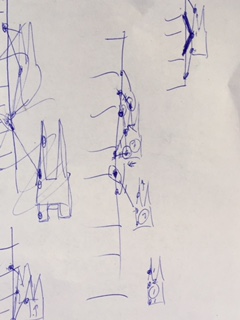
Because I’m new to sailing, I like things to be explicit to minimize error. Here is an example of a written plan we used to dock at Cat Cay, when we checked in with our passports and vessel registration information to Bahamian customs.
Paul’s No-Shoes Splinter
As we were about to leave the fuel dock, our son Paul lodged a splinter into his foot. He was not wearing shoes. Earlier, our friend Dave warned us to wear shoes when we were on the dock. His own son once had a splinter that required a razor blade and tweezers to extract.
In Paul’s case, Rick used a sterile, disposable scalpel and we soaked his foot. I will spare you the details. It was not pretty. I was able to numb Paul’s splinter area with Anbesol — thanks to the advice I received from an EMT on a boat called Copper Penny. As soon as the splinter was out, Paul felt no pain.
But I’m jumping ahead of myself. The splinter was removed about two hours after we left the fuel dock. Before that, Paul wouldn’t let me near his foot.
We Rushed and the Sea Won
By the time we were ready to leave the fuel dock, the winds had picked up a bit, but we were anxious to leave and didn’t recognize how difficult it would be to get ourselves off the dock. In hindsight, we should have taken our time and drawn up a written plan. As I learned in Antigua: “Slow is pro.”
Instead, what happened next played out like a bad dream. I couldn’t keep the boat off the dock, even with help from someone ashore. Rick steered to move away from the dock but the wind would blow us right back. As he accelerated, I almost fell off the back of the boat. Our rear fenders struggled under the force of the boat being pushed into the dock. Wayward conch shells flew off our barbecue as our fenders knocked them off.
Later, I lay on our trampolines with my head resting on a fender. Meanwhile, Rick was eating a bowl of curry, sitting on the bow seat watching our anchor set.
Surrounded by clear waters and white sands, on the surface, we may have cut a picture of bliss. But all was not as it seemed. As our children watched a Christmas movie inside our boat (it is April), Paul soaked his foot in a bucket.
Swimming With a Wild Dolphin in the Bahamas — With Video
Originally posted May 1, 2016
Our family had a unique encounter with a wild dolphin. The dolphin stayed with us as we swam for a full hour, and probably would have stayed longer had we not got out of the water. Our friend Dave Houston said that in all his years of sailing, he had not seen a prolonged interaction like we experienced with our dolphin.
Fin spotted!
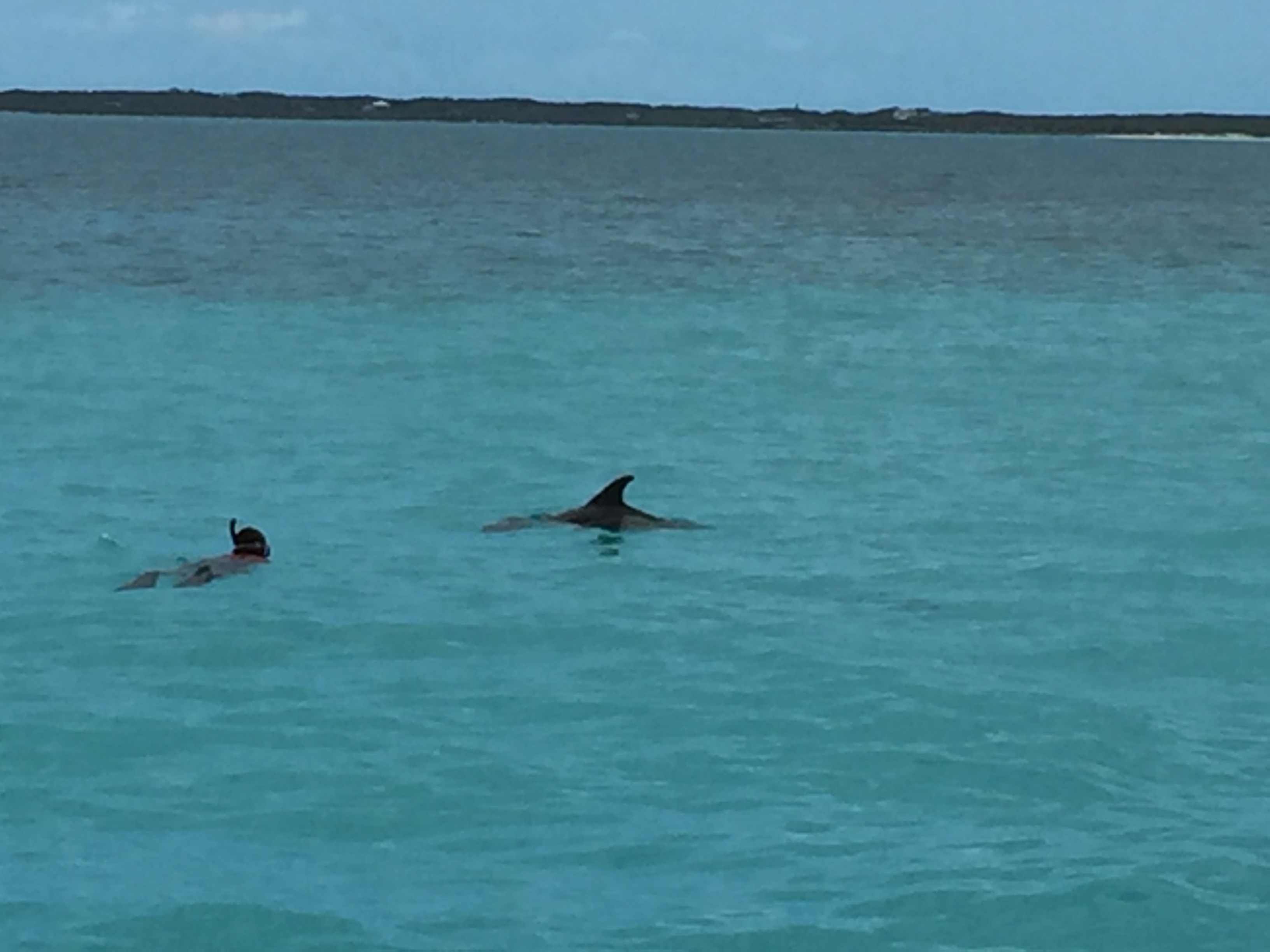
My husband, Rick, was the first person to spot the dolphin. He assured us that it was a dolphin, and said that he had seen its bottlenose head. Here is a picture of Rick in the water with the dolphin.
Shark or dolphin?
Here is roughly what was going through my mind as we watched this initial encounter.
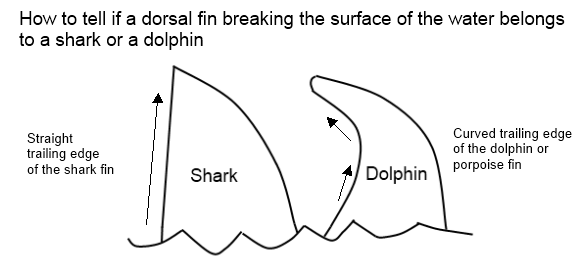
Would you have determined that the curve belonged to a dolphin?
I am glad that Rick was brave enough to jump in.
Soon, we all took turns swimming with the dolphin.
Here is Karen as she watched the dolphin underwater.
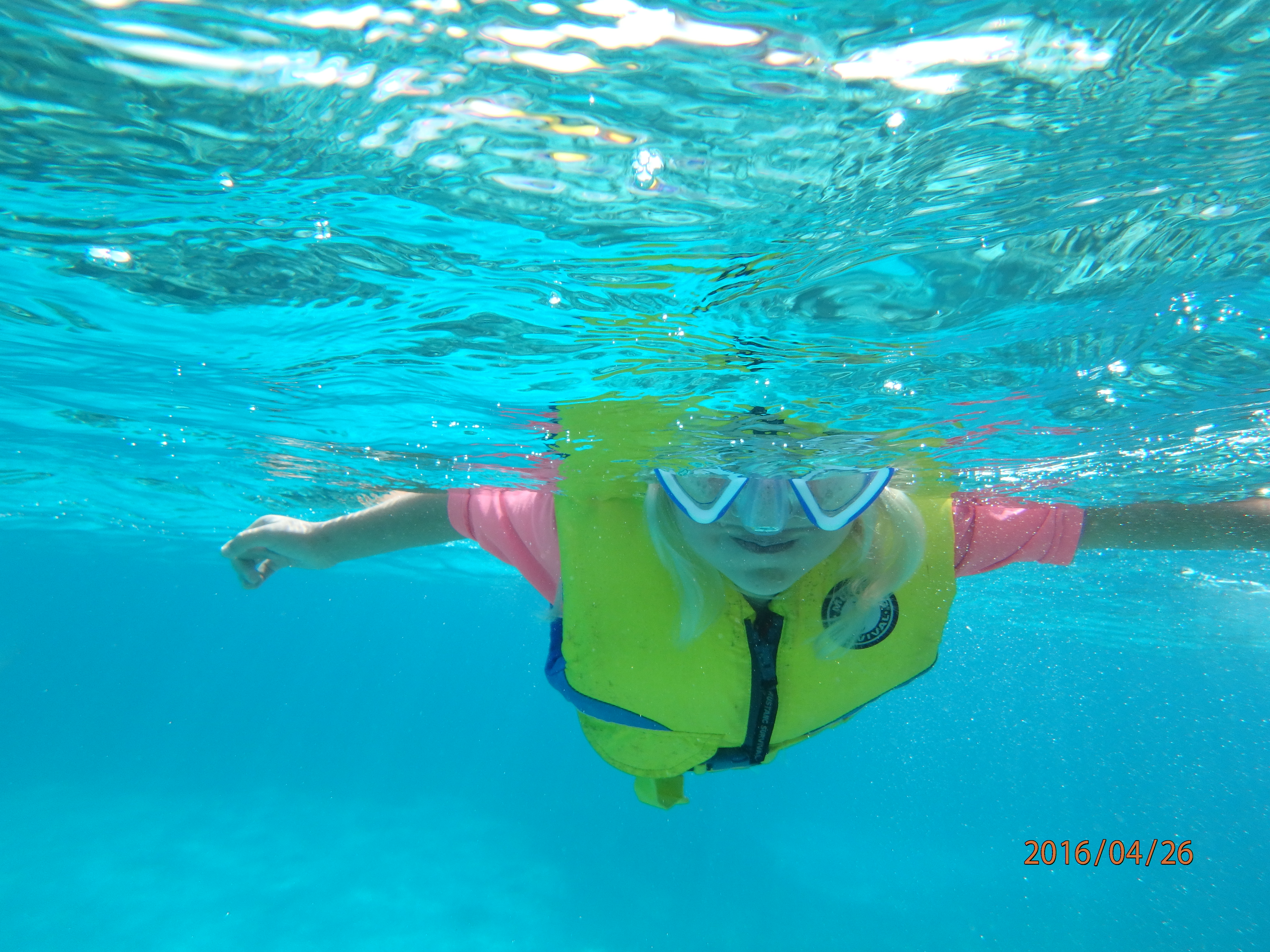
The dolphin seemed just as interested in us as we were in it. At one point, Karen and the dolphin seemed to be locked in a gaze.
We were glad to share this experience with our friends, Dave and Nathalie Houston (SV Cheval). Nathalie filmed the dolphin. Here is a video of the dolphin and 10-year-old Betty.
Rick created the video using Nathalie’s original raw footage. We have been playing with the iMovie application, and while I will continue to be writing, we hope to post more videos in the future.
Thanks for reading our stories from the Exumas.